
response to: The Cause, London
Jenkin van Zyl | March 2026
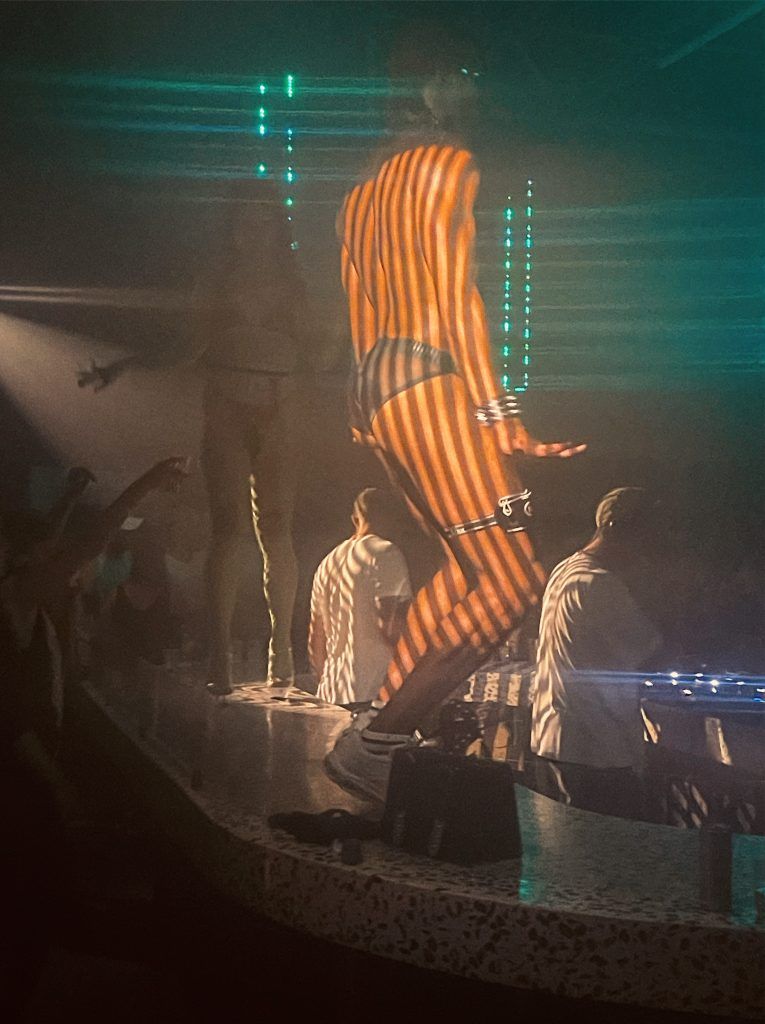
In 2021, I began a search for what art as experience felt like, in those times. Not what it meant, not how it was valued, but what it was like. Given how few situations remained in which art was encountered within a space and the traditional protocols of that space, some of us had already begun reaching through other tentacles – finding ourselves addressed by art in dispersed, unlikely forms, letting it happen to us outside the architectures that once held it. I reached out to artists and to a few writers I perceived to be working at the edges of art, and asked them to account for their encounters. I collated these into Art Exhibition Reviews 2021, supported by Kunstverein München. In a way, the project was a refusal: I didn’t want art critics to always hold the account. I felt that artists themselves were required to mirror the moment.
Jenkin van Zyl’s contribution offered tender gestures toward a disruptive visibility – one that moved in queer time, defying the re-established norms of surveillance and the reduction of participation to data point. What Jenkin described was a moment that invited a verification of what counts as event: not the spectacle captured, but the encounter that resists capture.
– Jenkin introduced by Lene Vollhardt
When I get around to moving the still sodden knot of zebra-print lingerie a few days later, left there as steaming votive, a little culture of mould is left growing from the sweat imprint left on my floor; something like the iridescent sheen of souring steak.
In the prior 16 months it had become increasingly clear that the Physical Real World was untenable. And besides, if I had lost the belief that this world could change for the better – than what? Pre-covid, London’s queer nightlife was in a decline, and by 2017, half of London’s gay bars have closed; queer venues were being pushed out by developers and profit hunters against a monotonous backdrop of drag race, social media and an attendant decline of subversion. I, meanwhile, had found myself transposing the hedonism of dance-floors for the hermetic hedonism of postgrad education.
In Summer of 2021, as an unrecognisable England braced itself for a reopening on Freedom Day, we were all craving social connection: hope, friendship, security—even negative connections like fear and, of course, anger; any connection at all. Outdoor raves, house parties and other illegal queer spaces had been fluorescing dubiously underground, however despite a light-in-the-middle-of-the-tunnel in the vaccine rollout, the notion of indoor clubbing was controversial.
In any case, the clubs opened amidst this re-negotiation of a world in which we were to regard each other’s bodies as potentially fatal. Nightclubbing, however, necessarily orbits itself around the crude mess of fantasy and so despite the disagreement, and on the stroke of midnight on July 19 2021, we skittishly painted ourselves for a trial by fire.
First the most essential part of any party: the preamble. The weather” horrific! In fact, it’s disgracefully hot; I melt in anything over 20 degrees and the temp is reading a sticky 30. I stupidly fill my flat with the additional heat of decorative candles, as though prepping for a seance, while nervous WhatsApp groups ping fuckk, is this acc happening? As friends arrive at mine I’m drinking, copiously, for Dutch courage; a toast to never, and melt a crumbled corner of a pill into my mouth; a first shrill taste of serotonin in something like 18 months.
After a fraught onward journey of false starts and missing passports, I brace myself by frothing back another bottle of Prosecco with Nicholas in front of the Cause’s gate and reapply some plumping serum lipgloss he has brought that makes your lips dilate. Excitedly nauseous, we join the back of what will be a one-hour queue of other fags in lingerie snaking the barriers. There is an uncomfortable exhilaration of bug chasing in a pandemic, com- bining with the dull (but then still novel) bureaucracy of covid-passes, LFTs and the air-kissing of queens you adore and hope to never cross in daylight.
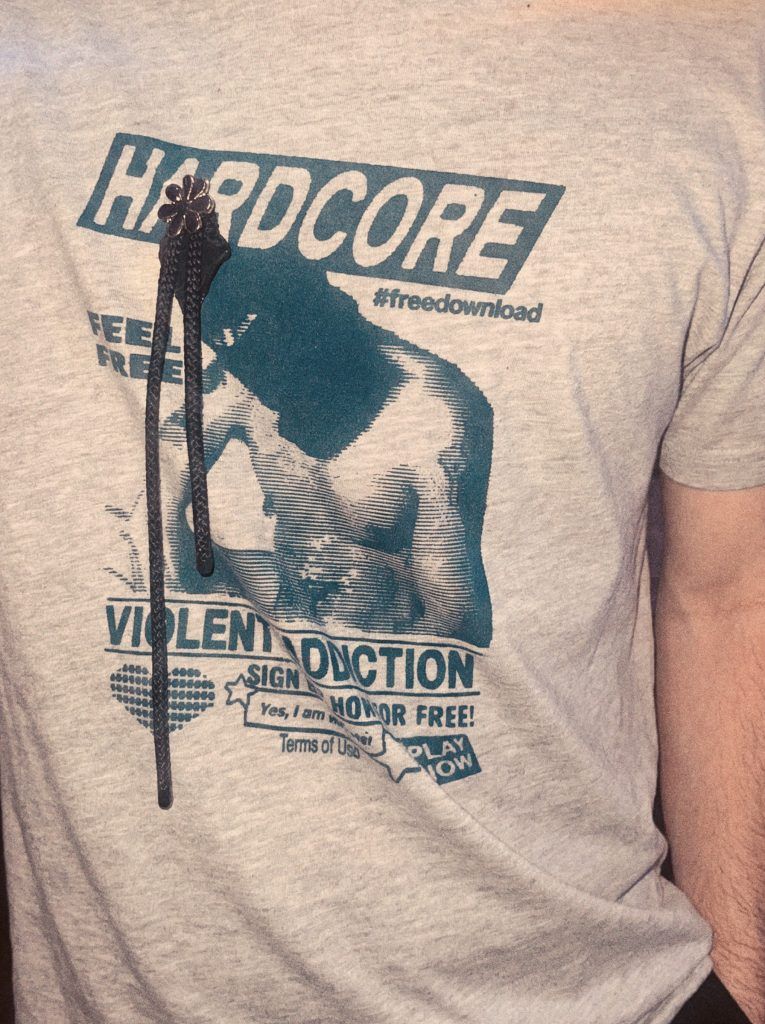
Mid-queue the uneasy thought flashes through me—god, could we live in a society where it’s against the law to see our loved ones again? Knowing the answer, unfortunately, to be yes: our discomforting adaptability one of the certainties evidenced by the last two years.
Once inside I’m a blur, my body on fire from the pure sensation of it all’of mass and collective bodies, of speakers… almost immediately my skittish- ness melts into the heat and I’m welcomed there by muscle memory. This Adonis is like being at a foam party that produces sweat and disembodied chatter rather than suds: you can’t move so much as slip. Bodies become bumpers to rudder your ship through the tides; a glittering sea of fags, identikit torsos, sword swallowers, dolls and gladiators, all palpably un- sure if they are having a Good Time or instead the right kind of Bad Time. Rather than the world opening up properly, and being the first of many nights back out, it feels like the crowd has instead received news that they had one more party before the end of the world. Somewhere that world must have been outside, still in motion, but for however-many-hours we were centre of its movement; an alternate ribbon of time reeling out a viral soup of the sexy and scary.
Time becomes unbraided and gravity yields its thong until I feel scraped- out and humming, acceptably liquidated. My alarm bells are ringing, but they sound like soft rock. My past and future selves keep me company
as the fog machine and blood-red lasers erase us all while a fleeting dance-partner plucks imaginary flowers out of the air to pin to my soaked harness.
Despite my indiscreet appearance, the moments where I’m most blissed- out on the dance-floor I’m feeling entirely invisible; held in the comfort that I’m in fingertip-reach of loved ones within the febrile ebb of the crowd. I want to be haunted, to make out with someone until I could taste the the iron in their sweat, I want an answer that makes my questions disappear, I want to be stunned so hard by the speakers my skull echoes for days.
The night fades on with its fair share of drama and amnesia, but when the super glue keeping my prosthetic horns and ears adhered become irre- vocably unstuck I decide to call it a night. I stagger outside to starry-eyed millipedes as big as cars limping about Tottenham refreshing their Uber’s.
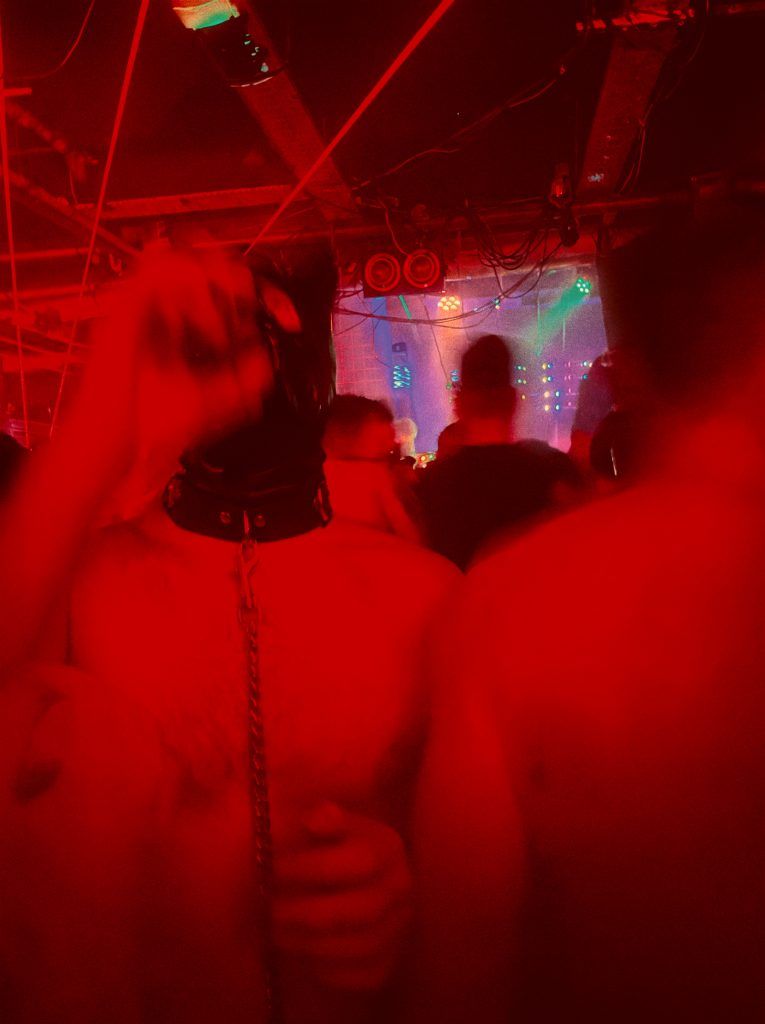
I think we all have an addiction for fantasy: clubs were a votive for dreaming; if the world were crumbling, we used to be able to count on it to be there, weekend after weekend. I think I essentially seek to go out out because I
like the space of being in a state of oblivion without feeling alone: in a good nightclub it’s not about individualism or atomisation, it’s a collective expe- rience of reaching beyond yourself and creating something — a deluge of sensation spun amongst other fantasists.
Inevitably, the outside world (with its attendant racism, transphobia, misog- yny and classism) provides the scaffolding for our queer dance floor. But I ultimately think clubbing at its best can be its own form of world building, with new logics, rules, confusions, negotiations and disappointments.
As we enter into another period of winter uncertainty I feel now at least slightly bolstered by the reassurance that our
collective muscle memory can remain in tact, at least a little bit longer. So much will change, but I’m reminded and reassured by Adonis” New Year’s Day party-line of If we can, we will.
As I let my brain become unstuck and I reel myself out into bed, I comfort my- self with a lyric from a track by Jenny Hval my phone shuffled on the journey home.
You are your own disco ball Hval sings, her glassy vocals buoyed by muted drum tones;
hovering above you like a comforting reminder, that not even you belong to you